Pinching removes a young shoot's growing tip to encourage branching. The result can be a fuller plant, but the trade-off may include later first flowers.
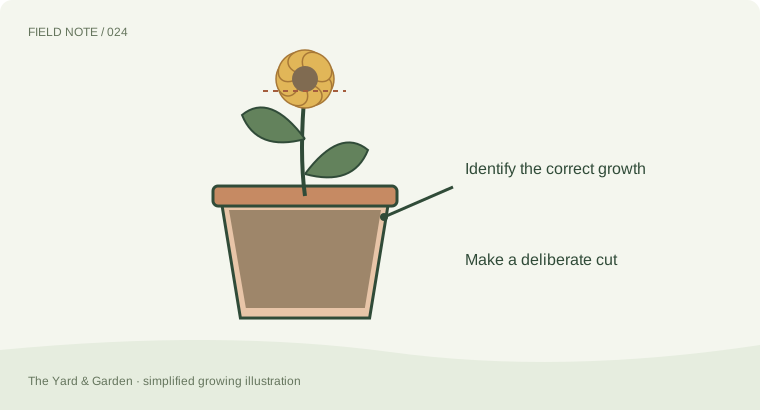
Check the species and growth habit
Some annual flowers respond well to pinching; others are grown for a single main stem or do not need it. Read guidance for the exact variety before cutting. A compact cultivar may already have the shape you want.
Work on a healthy, actively growing plant with enough established leaves to continue growing afterward. Identify a suitable node and remove only the intended tip with clean fingers or snips. Do not confuse pinching with cutting a stressed seedling back almost to the soil.
Give the response time
Side growth takes time to appear. Keep normal care steady and do not repeatedly pinch new shoots because the plant has not become bushy overnight. A plant in poor light will not develop a good shape simply because its top has been removed.
For a first experiment, pinch one suitable plant and leave another comparable plant alone. Mark the date and observe branching and flowering. This small comparison teaches more than applying a technique to every pot without knowing what change you wanted it to produce.
Further guidance & source notes
- University of Minnesota Extension: Starting seeds indoors
- University of Minnesota Extension: Lighting for indoor plants and starting seeds
These are background resources, not an endorsement of this website. Regional instructions and the needs of your plant take priority.