Home composting
Turn suitable everyday materials into something useful.
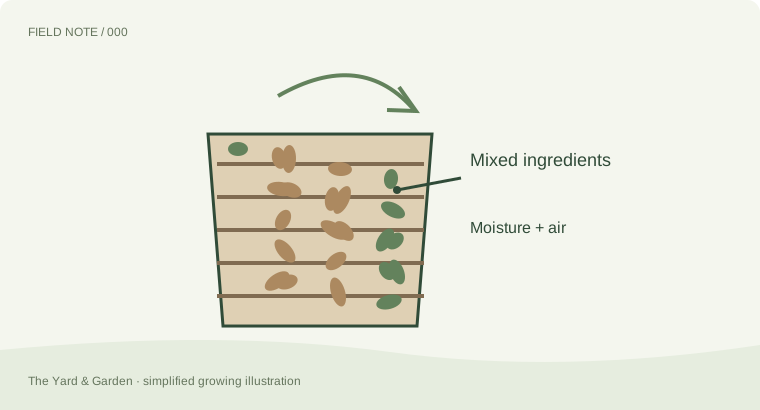
Set up your first compost bin
Begin with suitable materials and a place you can reach in ordinary weather.
Greens and browns describe a role, not a color
Coffee grounds are brown to look at but usually count with the greens.
Make a useful reserve of dry browns
A small supply beside the bin prevents a run of wet additions.
Collect kitchen scraps without creating a second compost bin
The indoor container is a short-term collection point, not the whole process.
A compost pile that smells unpleasant
Check air, moisture, and recent ingredients before buying an activator.
A compost heap that seems too dry
Water needs to reach the inside of the material, not only its surface.
Does a home compost pile have to get hot?
Heat is one useful sign of activity, not the only route to decomposition.
Turn compost when there is a reason to turn it
Mixing can add air and even out conditions, but it should serve the process.
Coffee grounds belong in a mixture
Use modest amounts with other materials rather than making a dense coffee layer.
Add grass clippings without making a wet mat
Fresh clippings need mixing, and treatment history matters.
Make leafmould from fallen leaves
A slower leaf-based process can be useful alongside ordinary composting.
Keep questionable weeds and diseased material out
A small cool bin cannot promise to neutralize every seed, root, or pathogen.
Know when compost is ready to use
Judge the whole batch by condition and history, not only by its color.
Put finished compost to a useful job
Soil improvement and surface mulching are different from filling a pot entirely with compost.
Use a compost tumbler as a batch system
Rotation makes mixing convenient, but the ingredients still need air, moisture, and time.
Would a worm bin fit your home?
Composting worms need suitable bedding, food, moisture, and protection from extremes.