Clay-rich soil can hold water and nutrients well, yet become difficult to work when wet. Walking or digging through it at the wrong time can make its structure worse.
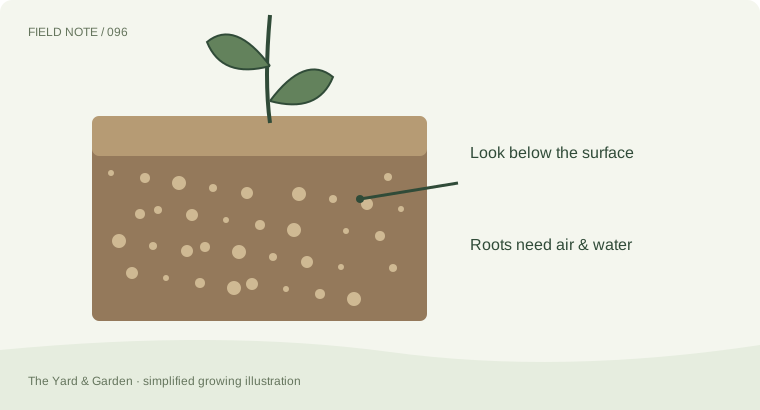
Wait until it is workable
If the soil smears heavily and sticks in dense masses, postpone cultivation where possible. Use paths or boards appropriately to avoid repeatedly trampling planting areas. Do not make a smooth-sided planting hole in saturated ground and assume a handful of compost will solve the site.
Well-rotted organic matter can support structure over time, used according to local guidance and soil-test information. Adding a small amount of sand is not a reliable cure for heavy clay and can create an unhelpful mixture.
Choose plants that fit
Improvement has limits, especially where drainage problems involve the wider site. Select plants suited to your conditions, or consider a properly designed raised growing area if appropriate. Avoid simply filling isolated holes with very different material while surrounding water has nowhere to go.
Watch the bed over several seasons. Soil care is cumulative, and one application will not turn a clay soil into a completely different texture. The practical aim is a well-managed version of the soil you have, with less compaction and a planting that can use its strengths.
Further guidance & source notes
- University of Maryland Extension: Growing media for containers
- Royal Horticultural Society: Caring for soil
These are background resources, not an endorsement of this website. Regional instructions and the needs of your plant take priority.