Some flowers are meant to finish their lives after a single growing season. Others build leaves first and flower later. Knowing which you have can prevent a perfectly ordinary ending from looking like failed care.
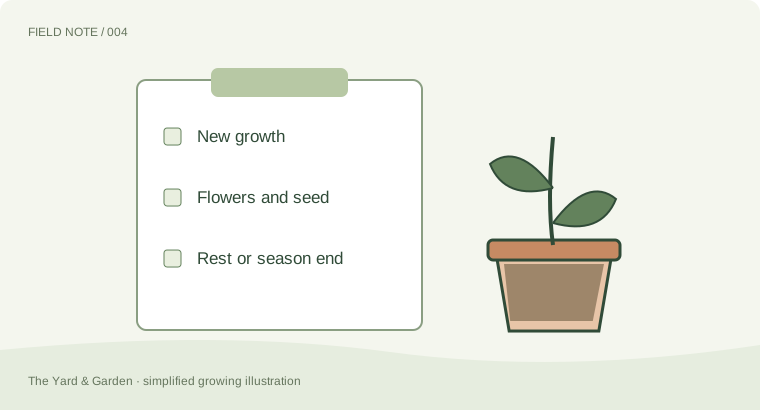
Three different patterns
An annual completes its life cycle in one growing season. A biennial typically grows vegetatively in its first season, then flowers and sets seed in the next. A perennial can live for several years, although it may disappear below ground or stop looking attractive for part of each year.
These labels do not override climate. A tender perennial may be grown as an annual where winters kill it. Some short-lived perennials need replacing sooner than the word perennial might suggest.
Buy for the experience you want
Annuals can provide a relatively quick display. Perennials ask you to consider what the pot or bed looks like outside the flowering period. Biennials need a little planning if you are expecting flowers immediately from seed.
Keep the plant's expected cycle beside its name in your notes. When flowering slows, ask whether the season is ending before assuming the plant needs rescue. A healthy garden includes plants resting, setting seed, and finishing; constant bloom is a design choice requiring succession, not the normal behavior of every individual plant.
Further guidance & source notes
- University of Minnesota Extension: Starting seeds indoors
- University of Minnesota Extension: Lighting for indoor plants and starting seeds
These are background resources, not an endorsement of this website. Regional instructions and the needs of your plant take priority.