In a dense container, the easiest visible target is often the foliage. Much of that water may run away from the root ball or splash onto nearby surfaces.
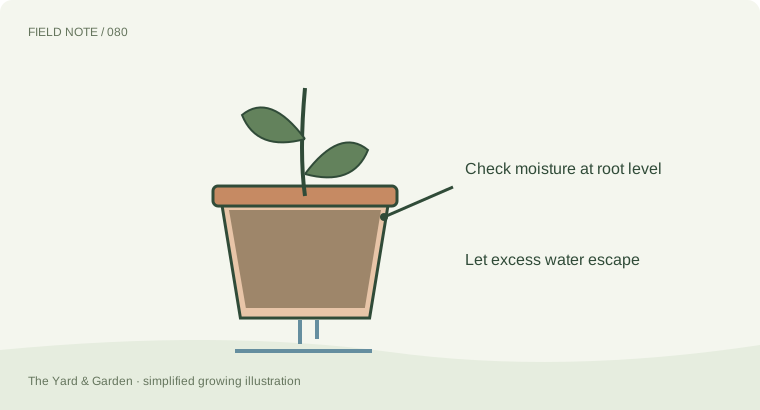
Part the leaves gently and use a controlled spout to reach the mix. Move around the accessible surface rather than pouring everything into a single hollow. For a garden bed, use a suitable gentle application that wets the root area without washing soil from around the plant.
Keep the crown in mind
Some plants are sensitive to water collecting at their crown or between leaves. Others tolerate rain naturally but still benefit from a watering method that avoids prolonged unnecessary leaf wetness. Follow the particular plant's needs.
Overhead irrigation is not always avoidable or wrong. If it is the practical method, choose conditions and equipment that reduce waste and allow foliage to dry where disease risk matters.
Look afterward to see where the water went. A wet patch beside a pot is not a watered root ball. Good technique is less about performing a particular motion than about delivering appropriate moisture to the roots, without creating erosion, runoff, or hidden standing water as a side effect.
Further guidance & source notes
- University of Minnesota Extension: Fertilizing and watering container plants
- University of Maryland Extension: Potting and repotting indoor plants
These are background resources, not an endorsement of this website. Regional instructions and the needs of your plant take priority.